Summary
- Co:Create, a tattoo marketplace, was missing out on organic traffic because of weak technical SEO foundations. Google was ignoring large parts of the site altogether, and only rarely visiting highly relevant pages.
- I was hired to figure out why, and what it would take it to fix it.
- I found a proliferation of soft 404s, non-canonicalised parameter URLs, inaccurate use of redirects, widespread cannibalisation, and significant duplication caused by indexable staging sites.
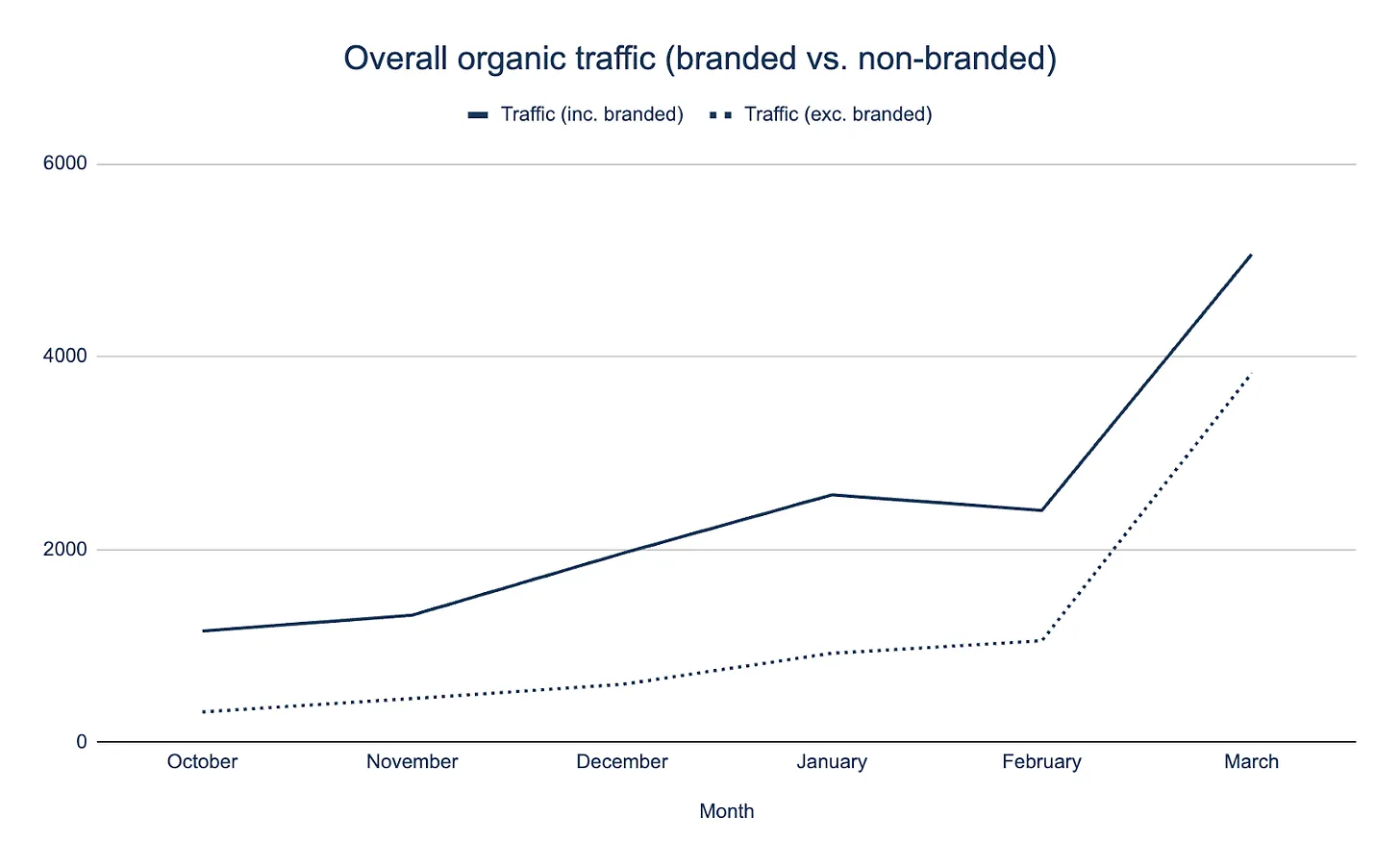
- Upon fixing these issues, results were rapid and significant: **unbranded traffic grew by 264% (over 2,000 clicks per month)** as a direct result of technical SEO improvements.
The client
Co:Create is a marketplace connecting tattoo artists with people who want to get tattoos.
With a selective artist recruitment process and comprehensive onboarding for new customers, Co:Create emphasises the artist-client relationship. It's especially popular with people getting their first tattoos.
The challenge
SEO was a relatively new channel for Co:Create, but the opportunity was huge. Several of Co:Create's competitors earned hundreds of thousands of organic visitors per month.
To reach those kinds of numbers, Co:Create would need to focus on “scalable” assets like artist landing pages, tattoo designs, and indexable filters. As the product grew, and more artists joined the platform, so the site's content would grow too.
The SEO challenge, then, would be technical. All these new pages would, if not carefully managed, lead to issues with crawling and indexation.
The site was already relatively large when Co:Create hired me, with almost 3,000 pages and 10,000+ URLs. Until that point, it had grown without specialised SEO support.
So we needed to start with a deep technical analysis of the existing pages. How could we improve the current structure of the site to earn more organic traffic in the short term and lay the foundations for exponential growth?
The approach
As ever, my aim with this technical analysis wasn't to diagnose every single technical imperfection through a standardised audit checklist, but instead to figure out:
- Google's relationship with the site - what are the dynamics and patterns in how it crawls, renders, indexes and ranks the site?
- what themes and patterns we see in terms of technical SEO issues, and why the same issues crop up repeatedly
- what the most important fixes are that we could make to improve organic traffic and revenue
I started, as I always do, by dumping a bunch of data into a big spreadsheet - Screaming Frog crawls, Search Console performance and indexation data, conversion numbers from GA, my own notes from clicking around the site - to see what I could find.
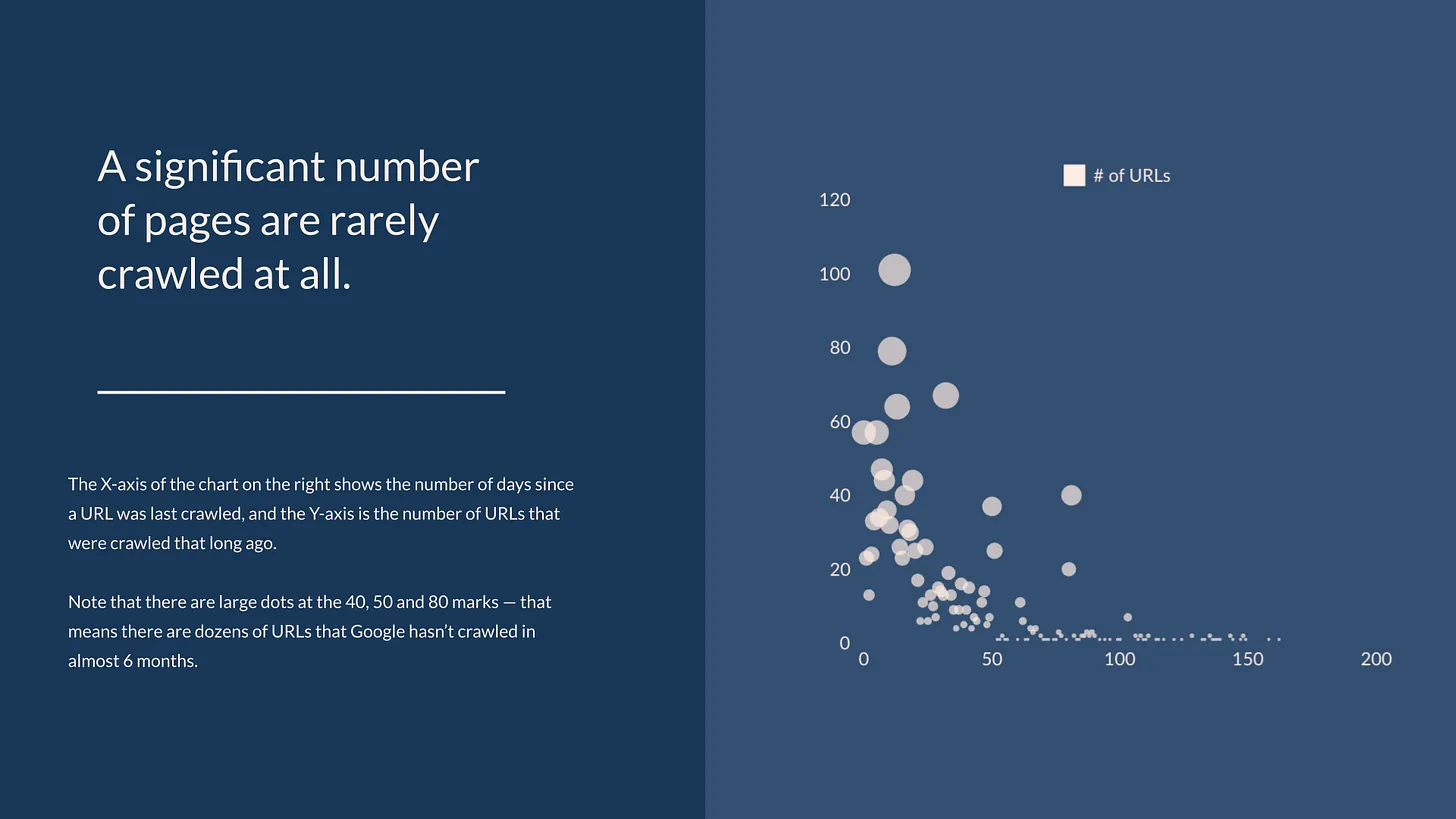
Over time, a clear pattern emerged: the site contained too many “low-quality” URLs, and crawlers weren't being clearly directed to the most important content. As a result, Google was ignoring large parts of the site altogether, and only rarely visiting highly relevant pages. Over one third (almost 1,200) pages were “crawled, not indexed”.
The main causes of the low-quality URL bloat were:
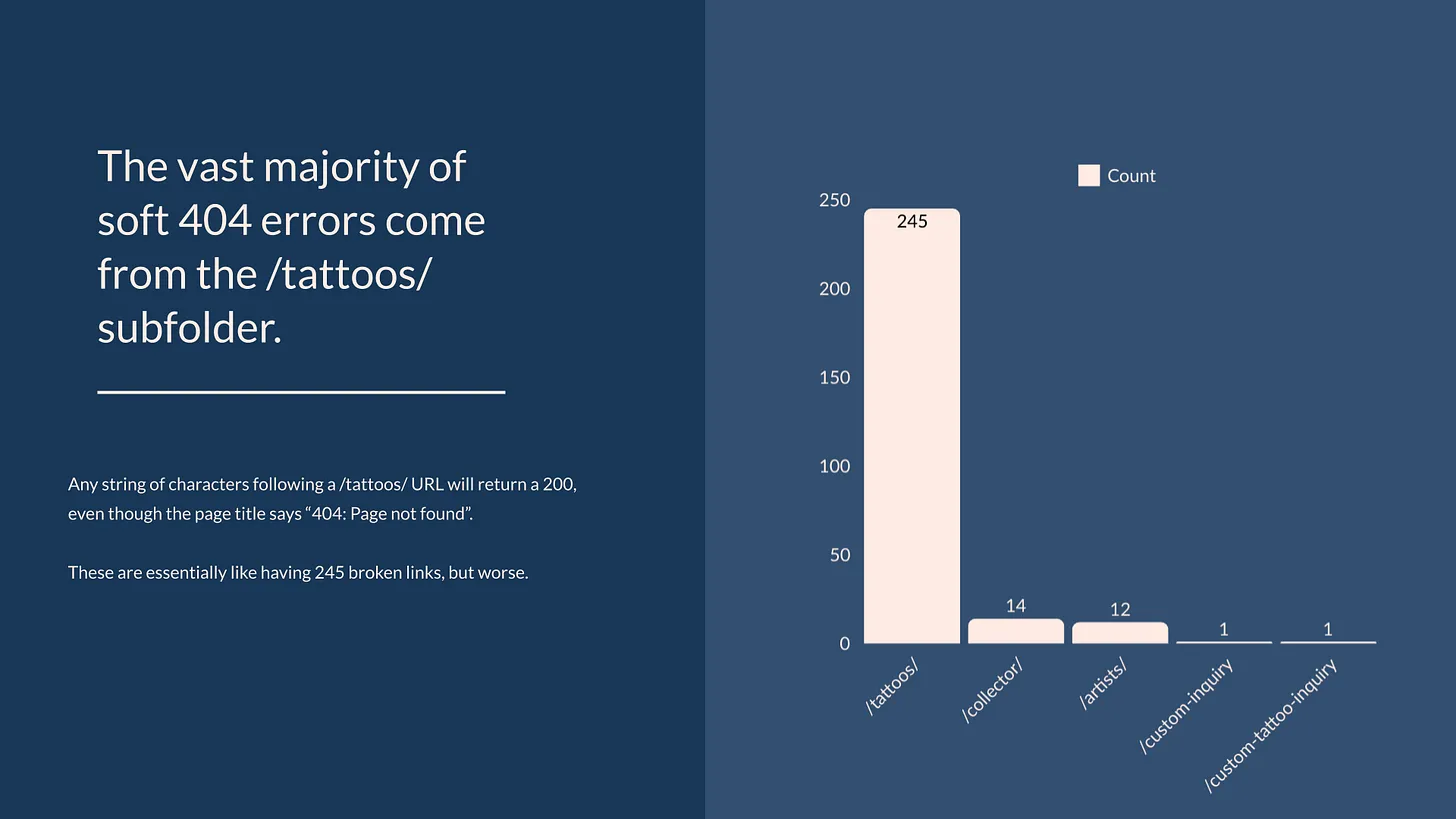
- Soft 404s: dozens of pages returned 200 status codes but contained a “page not found” message in the content. This occurred when tattoo artists stopped being available through the platform.
- Non-canonicalised duplicate parameterised URLs: artists who were *listed* on the platform but weren't *bookable* could be requested through a submittable form. Each artist request form sat on a unique, self-canonicalised, indexable URL, but the content was identical on each URL.
- Broken internal links.
- Incorrect status codes for redirection: in many cases, 307 redirects were used instead of 301s, even though the redirects were intended to be permanent. Google rarely crawled these URLs because it expected them to change again soon.
- Indexable, non-canonicalised staging sites: various staging and testing sites were crawlable and indexable, typically findable through outdated content that had never been removed from the sitemap.
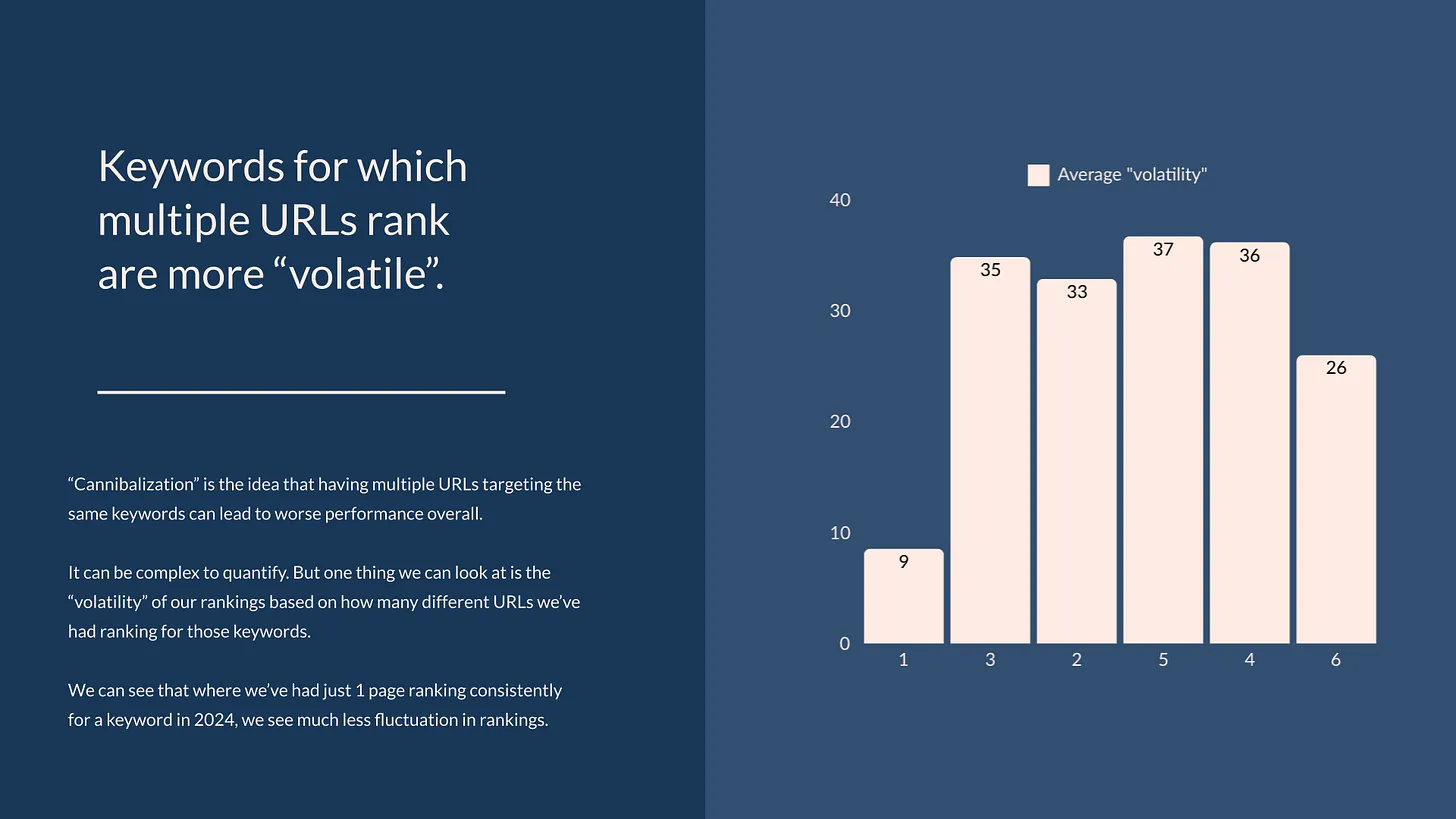
Evidence suggested cannibalisation was affecting rankings, too. Each artist's individual tattoo designs had their own page - for many queries (especially artist names), Google oscillated between ranking the artist page and that artist's tattoo design pages.
Having multiple URLs isn't always a bad thing - sometimes it just means you get to take up more of the SERP - but in Co:Create's case it was causing issues.
Queries for which more than one URL had ranked in the top 10 over the course of a year tended to have more volatile rankings than those with a single, consistently ranking URL.
To address this cannibalisation, I recommended a clear internal linking structure that demonstrated the hierarchical relationship between artist and tattoo designs. Internal linking was weak at the time, partly because of internal linking components that relied on onclick JavaScript events (which Googlebot can't interact with).
The output
I captured all this analysis in three documents:
- A spreadsheet detailing all affected pages, organised by technical issue.
- A write-up detailing each technical issue and explaining the necessary fix, following a “what's happening - why it matters - how to fix it” format, ready for devs to implement.
- A slide deck explaining the “why” behind recommendations, and the patterns in Googlebot's interactions with the site.
And throughout the implementation I was on-hand to answer questions and validate fixes.
Fixes were implemented over two weeks. We waited an additional two weeks to give Google time to re-interpret the site and adjust rankings, and then assessed the results.
The results
The immediate impact of resolving crawl and indexation constraints was clear and measurable.
In the month after the technical improvements were implemented, unbranded organic traffic increased by 264% month-on-month - from just over 1,000 clicks in February to almost 4,000 in March.
The AI tattoo generator, in particular, benefitted from the newly efficient crawl management and cleaner site structure:
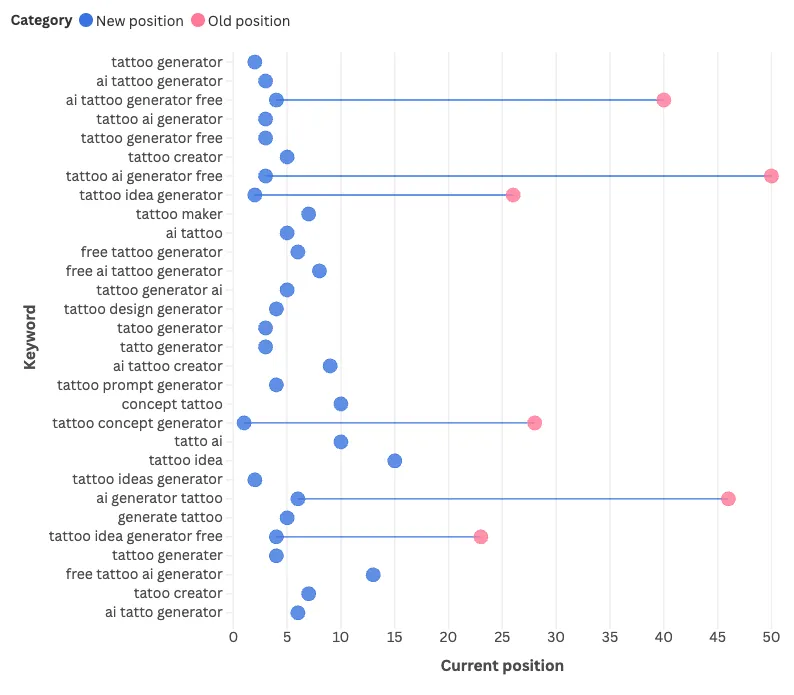
Various technical SEO metrics improved too:
- More URLs were crawled
- A greater proportion of crawled URLs were indexed
- Soft 404 errors dropped significantly
- Fewer pages were duplicated
Each of which correlated significantly with higher traffic overall.
Matt Hamilton, Co:Create's CPO, said:
“Kurt's work was thoughtful and execution-ready. He caught technical issues we'd overlooked and paired that with a keyword strategy that gave us real direction. Sharp, strategic, and the kind of partner you want when SEO actually matters.”
Matt Hamilton, CPO of Co:Create
If you're looking for help with a similar project, get in touch.